You may know how your parents met, where they grew up and the job they did for thirty years. You might know much less about the friend they spent every Saturday with, the first room they rented, or the decision that nearly took them somewhere else.
The questions below are a way into those parts of their lives. They are grouped by life stage, with follow-ups to help you stay with an answer. Choose a few that make you curious. You can leave the rest for another day.
Five questions to start with
If you would like a short list to take into your next conversation, begin here:
- What's the first home you remember? What could you see when you opened the front door?
- Who did you spend time with as a child? What did you do together?
- What was your first job? What do you remember about your first day?
- When did you first leave home? What did you take with you?
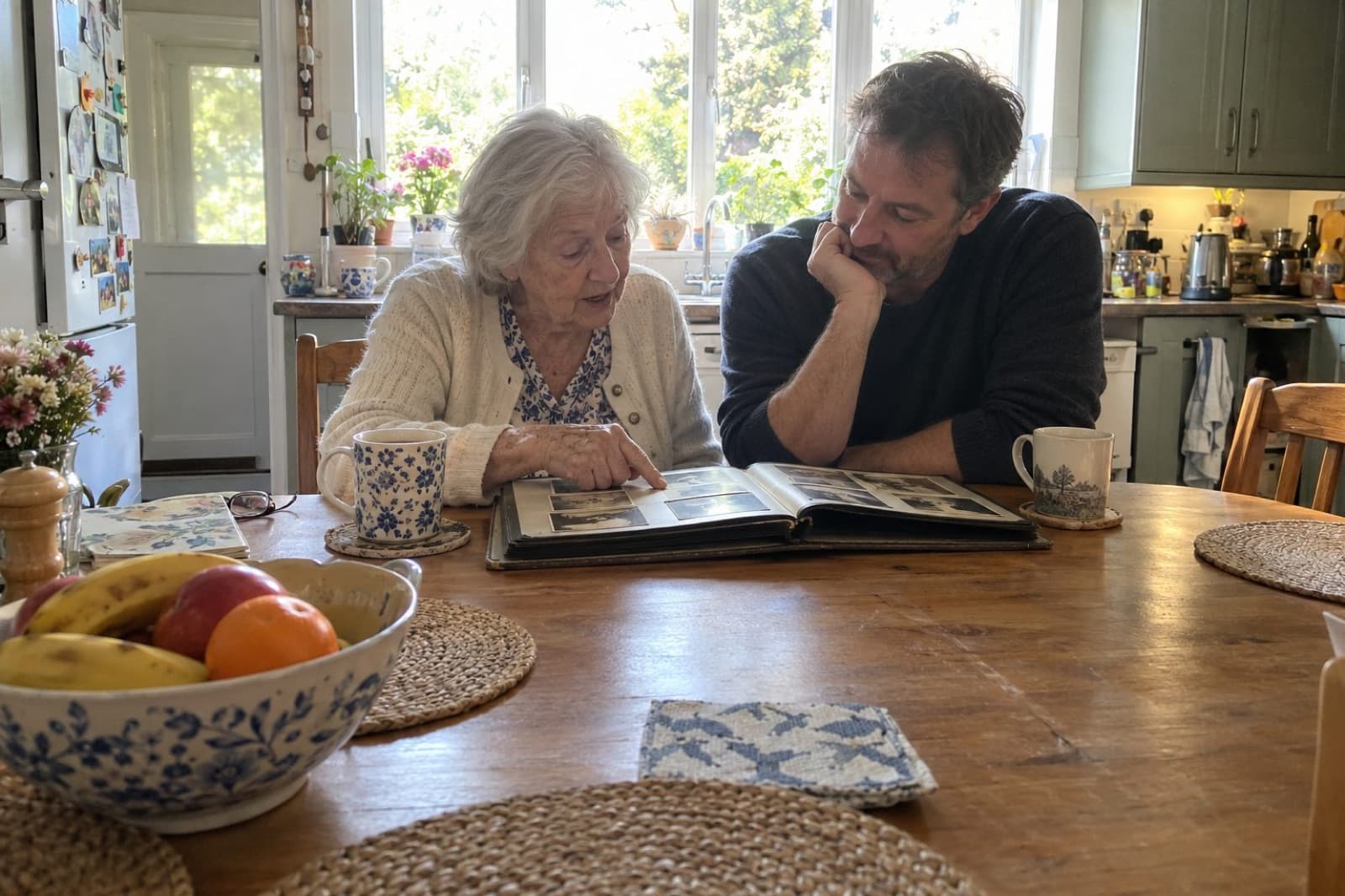
- Is there a photograph you would like to tell me about? What was happening just outside the picture?
You can ask your mum, your dad, a grandparent or another relative. Adapt the wording to your family and let them choose what they would enjoy talking about.
How to ask
Give each question enough room for an answer. If your parent takes the conversation somewhere you hadn't expected, you can follow them and return to your list later.
Ask one question at a time. “What was your school like?” leaves more room than “Did you like school?” Wait for the answer before adding a follow-up.
Ask for a particular moment. Suppose your dad says, “We moved to another town when I was ten.” You might ask, “What do you remember about arriving?” Then wait. There could be a journey, a new bedroom or a person who met them at the door. Let them supply the details.
Stay with their words. If your mum mentions “the green coat”, ask about the coat. If she mentions a neighbour you have never heard of, ask who they were. You don't need to move to the next question just because the first one has an answer.
Leave a little space. A pause can mean someone is thinking. Give them time, without treating silence as a demand to say more. “Would you like a moment, or shall we try something else?” is useful if you're unsure.
Ask about choices gently. “What made you decide to take that job?” gives someone room to describe their reasons. Avoid putting a feeling into the question: “Were you terrified?” assumes more than “How did you feel about it?”
Offer a way to move on. “Would you like to talk about that?” is enough. An unanswered question can stay unanswered.
Open questions, attentive listening and following up on details are also central to the Smithsonian's guidance on oral history interviews.
Setting it up
Choose a quiet moment and explain what you would like to do: “I'd love to hear more about when you were young. Would you like to sit down together and talk about it?”
Some people enjoy a spontaneous conversation. Others prefer a few questions beforehand. Ask which would suit them, and suggest a manageable first topic, such as school or their first home.
You don't need to fill an hour. Start with twenty minutes if that feels comfortable, and check whether they would like to carry on. A few shorter conversations can give you time to return to things that come to mind afterwards.
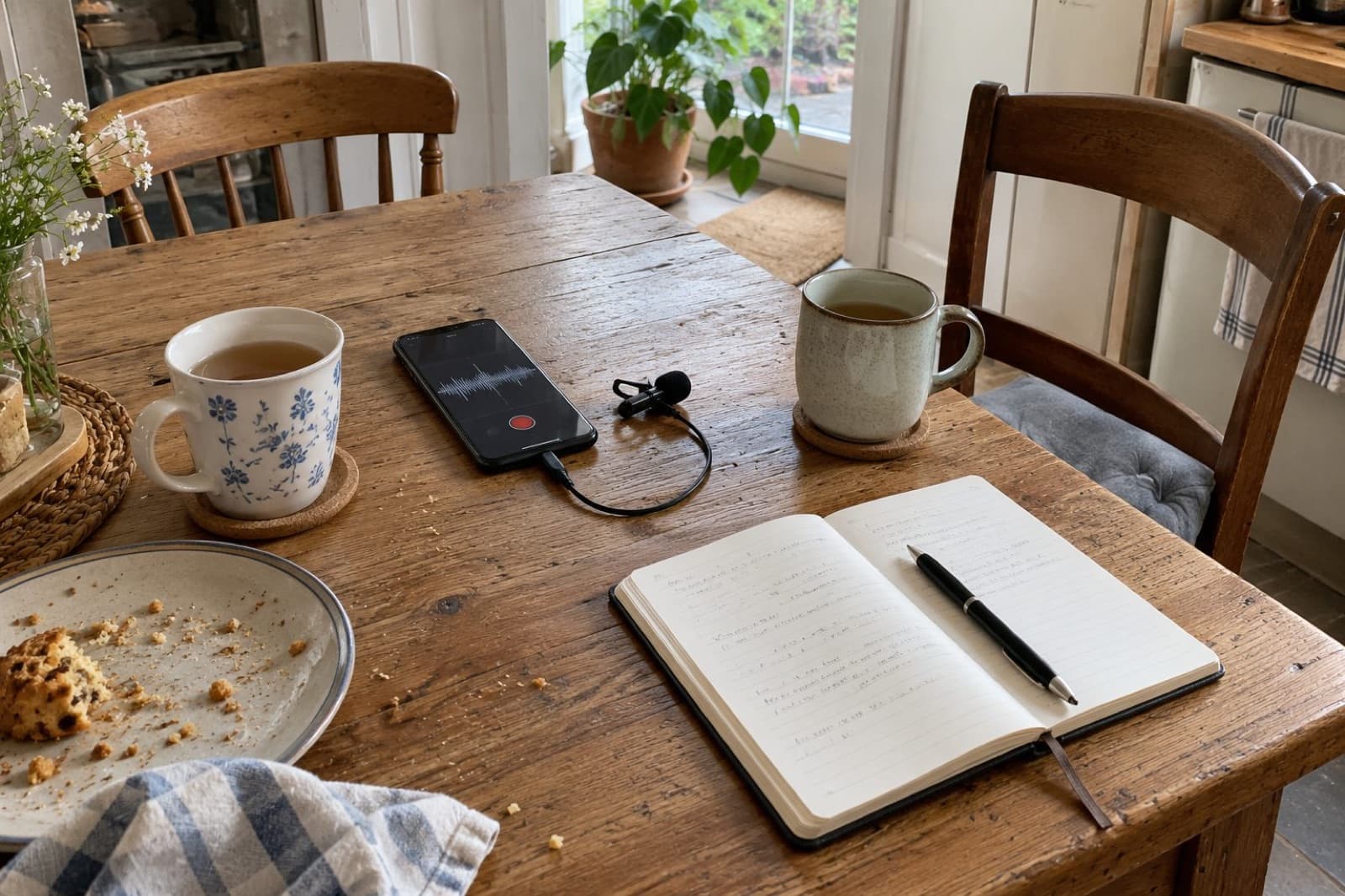
If you would like to record, ask first and agree who may hear it. Make a short test and play it back together. Set the phone somewhere stable where it picks up both voices, then leave it alone while you talk. If they would rather not be recorded, you can simply listen or ask whether they would be happy for you to take a few notes.
Keep a recording private until you have agreed what can be shared. Family conversations can include other people's stories too.
Childhood
- Where were you born, and what's the first home you remember? Then: Walk me through the front door. What do you see? Which room did everyone spend their time in?
- What's your earliest memory? Then: How old were you? Who else is in it?
- What was your mother like? Then: What did she say when you came home late? What did she cook, and what did she sing?
- What was your father like? Then: What did he do for work, and what was he like when he came home?
- Who else lived nearby? Then: Who was the character of the street? Which house did children avoid?
- What did you do on a Saturday? Then: Where did you go, and who with? What did it cost?
- What were you not allowed to do? Then: Did you do it anyway?
- What did you have that other children didn't, or wish you'd had? Then: Who gave it to you, or why couldn't you have it?
- What did your family eat on a special occasion? Then: Who cooked it, and is there anyone who still makes it?
- What was going on in the world that you remember hearing about? Then: How did you hear about it? What did the grown-ups say?
School
- What was your school like? Then: How did you get there each morning? What did the classroom look like?
- Which teacher do you still think about? Then: What did they say or do that stayed with you?
- Who was your best friend? Then: What did the two of you get up to? Are you still in touch?
- What were you good at, and what did you dread? Then: Did anyone notice you were good at it?
- What was the naughtiest thing you ever did at school? Then: Did you get caught? What happened?
- How old were you when you left school, and how did you feel about it? Then: What did your parents want you to do next?
Leaving home
- What did you want to be when you were young? Then: What happened to that idea?
- When did you first leave home, and where did you go? Then: What did you take with you? How did your parents take it?
- What was your first place of your own like? Then: What did it cost, and who did you share it with?
- What did young people do for fun then? Then: Where did you go on a night out? What did you wear?
- Was there a moment you nearly made a different choice? Then: What do you think would have happened?
- What news from those years do you still remember? Then: Where were you when you heard it?
Work
- What was your first job? Then: What did you do with your first pay packet?
- Which job did you like best, and why? Then: What did an ordinary day look like?
- Who was kind to you at work when you needed it? Then: Did you ever get the chance to tell them?
- Who was the best boss you ever had, and the worst? Then: What did the good one do differently?
- What was the hardest day you had at work? Then: How did you get through it?
- What were you proudest of in your working life? Then: Did anyone at home know about it at the time?
- If you could have done any job at all, what would it have been? Then: What stopped you, or what made you glad you didn't?
Love
- How did you and Mum (or Dad) meet? Then: What did you notice first? What did you think of each other?
- What was your first date like? Then: Where did you go? Who paid?
- How did the proposal happen? Then: Did anyone know beforehand? What did your parents say?
- What do you remember about your wedding day? Then: What went wrong? What did you eat? Who gave a speech?
- What was your first home together like? Then: What furniture did you have? What did you argue about?
- What would you like us to know about that part of your life? Then: Is there a story you would enjoy telling?
Parenthood
- What do you remember about the day I was born? Then: Where were you, and who was there? What did you call me before I had a name?
- What was I like as a baby, and as a small child? Then: What did I do that drove you mad?
- What was the hardest part of those years? Then: Who helped? How did you manage the money?
- What do you remember about each of us that we probably don't? Then: Is there a story you've never told us?
- What did you want for us that you didn't have yourself? Then: Did it work out the way you hoped?
- What did your own parents think of how you brought us up? Then: Did they ever say so?
Later years
- What has surprised you most about getting older? Then: What's better than you expected?
- Which of the places you've lived feels most like home? Then: Is there a place you think about but haven't been back to?
- Who is your oldest friend? Then: How did you meet? What do you talk about now?
- Is there a year you would happily live again? Then: What made it special?
- What do you do now that you never had time for before? Then: What would you still like to do?
- What makes you laugh? Then: Who makes you laugh most?
Beliefs and looking back
- What did you believe in when you were young, and has it changed? Then: What changed it?
- What's the bravest thing you've ever done? Then: Were you frightened at the time?
- What do you know now that you wish you'd known at twenty? Then: Who taught you that, or did you learn it the hard way?
- Is there anything you would do differently? Then: What would you keep exactly the same?
- Is there someone you wish you had thanked? Then: What would you say to them?
- What are you proudest of? Then: Does anyone else know that?
- What would you most like your grandchildren to know about you? Then: Is there one thing you'd want them to remember you said?
Asking with grandchildren in the room
Children may be curious about things adults take for granted. What did you have for school lunch? Did you have a television? What happened when you got into trouble?
Let the child choose a question they actually want answered. There is no need for them to deliver a prepared interview.
A few ways to make it comfortable:
- Use something to look at. A photograph of a grandparent at the child's age gives them a place to begin.
- Give them their turn. Let the grandparent finish before explaining or adding your own version.
- Keep it short. Stop when either person has had enough.
- Follow their interest. If the conversation becomes entirely about a childhood dog, that can be a good afternoon.
- Ask before recording. Make sure everyone involved is comfortable, including the child, and agree privately how the recording will be used.
Questions about difficult years may be better left for a separate conversation. Your parent can decide what they want to discuss and with whom.
When they say there's nothing much to tell
A question about an entire life can feel like a large request. Try offering a smaller starting point: “What was the shop at the end of your road like?” or “Who used to visit on Sundays?”
A photograph or familiar object may help. You could ask about a recipe card, a school photograph or a piece of furniture they have kept through several moves. Let them choose the object.
If they enjoy talking about other people, follow that interest. Their best friend, a favourite teacher or a neighbour may give you a different view of their own life.
They may also simply prefer not to talk. You can leave the invitation open without trying to change their mind.
What if you remember it differently?
You may have heard another version of a family story. Let your parent finish before raising it.
Try, “I remember hearing it a little differently. What do you remember about that?” You don't need to settle every date during the conversation.
If you make notes or captions afterwards, keep uncertainty visible: “around 1962”, “possibly in Leeds”, or “as Mum remembers it”. A record can preserve someone's account without presenting every detail as certain.
Use a photograph to begin
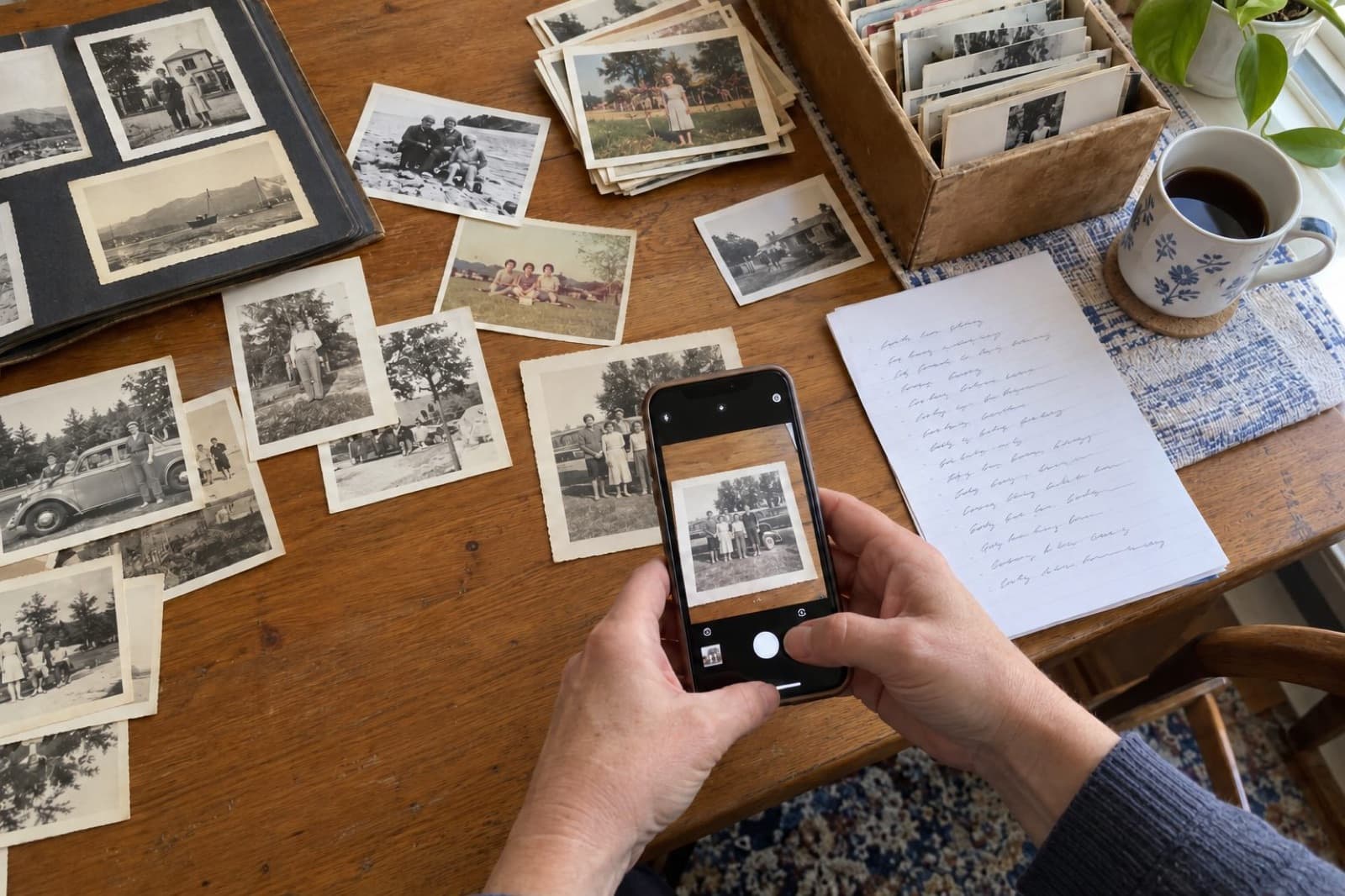
Choose one photograph together and ask who is in it, where it was taken and what happened that day. Then ask about something beyond the edge of the picture: who took it, how they got there or where they went afterwards.
If you decide to scan it, keep the names and the story with the file. A photograph captioned “summer holiday” will mean less to a grandchild than one that names the people and explains the occasion.
Your first conversation
Pick three questions from this page and offer your parent a time to talk. You might start with just one.
When you finish, ask whether there is anything they would like to come back to another day. Their answer can be the beginning of your next conversation.
If you would like us to do the asking and the writing, you can request a portrait.

Alastair is an experienced researcher and interviewer, and leads every Remarkable Lives conversation himself. He lives in Gothenburg.