If your parents say they have everything they need, choosing a Christmas gift can take a little thought. It helps to start with something specific to them: a place they talk about, an album they would like to sort, a recipe everyone asks for, or a day they would enjoy spending with you.
Here are ten ideas built around those things. Some you can make yourself; others you can arrange together as a family. Choose the one your parents would enjoy, and make the practical arrangements part of the gift.
1. A recorded conversation together
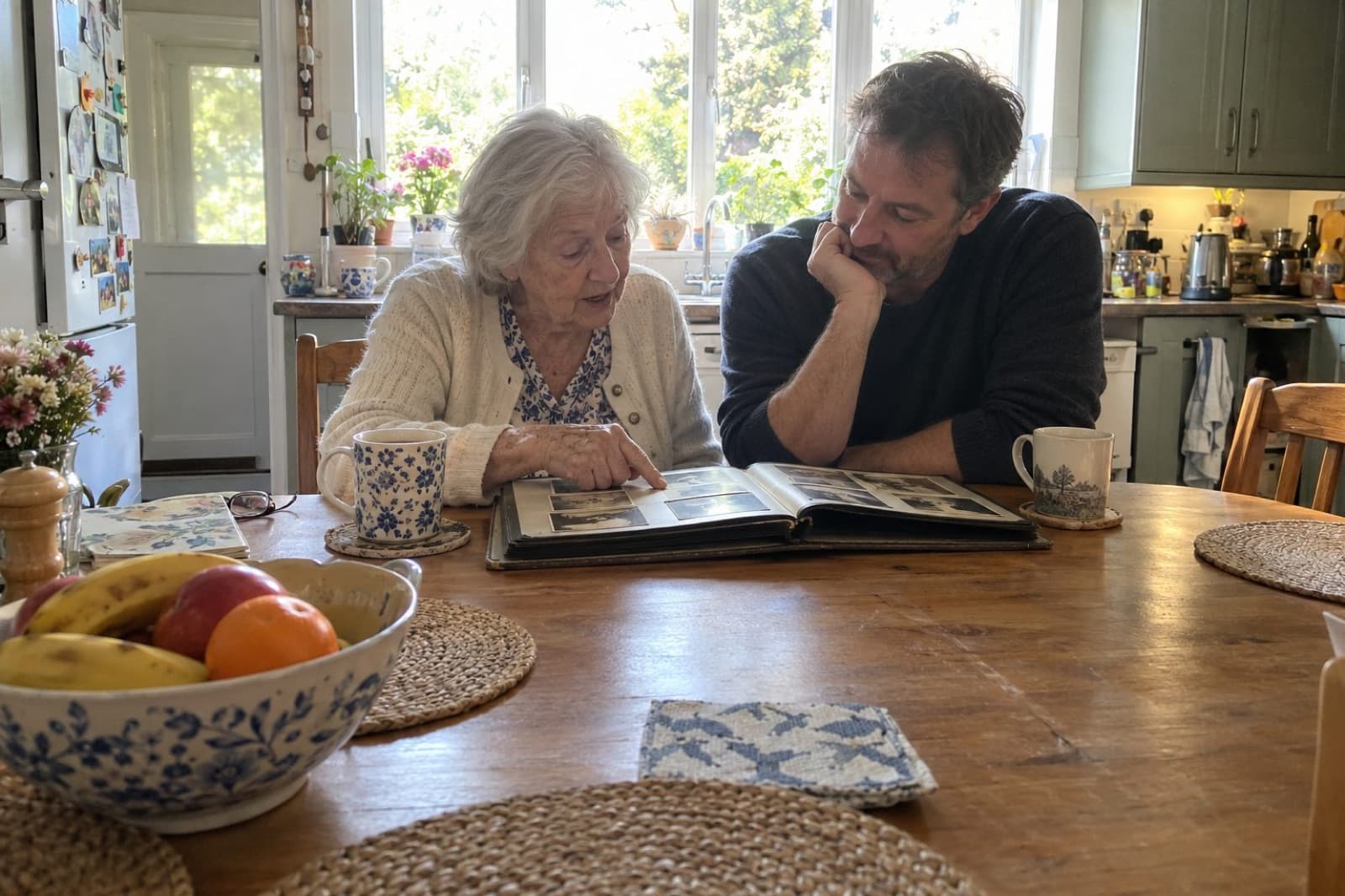
Offer to spend an afternoon asking about one part of their life: the house they grew up in, their first job, or how they met.
You could put a photograph in a card with a note: “I'd love to hear about this day. Shall we look through the album together in January?”
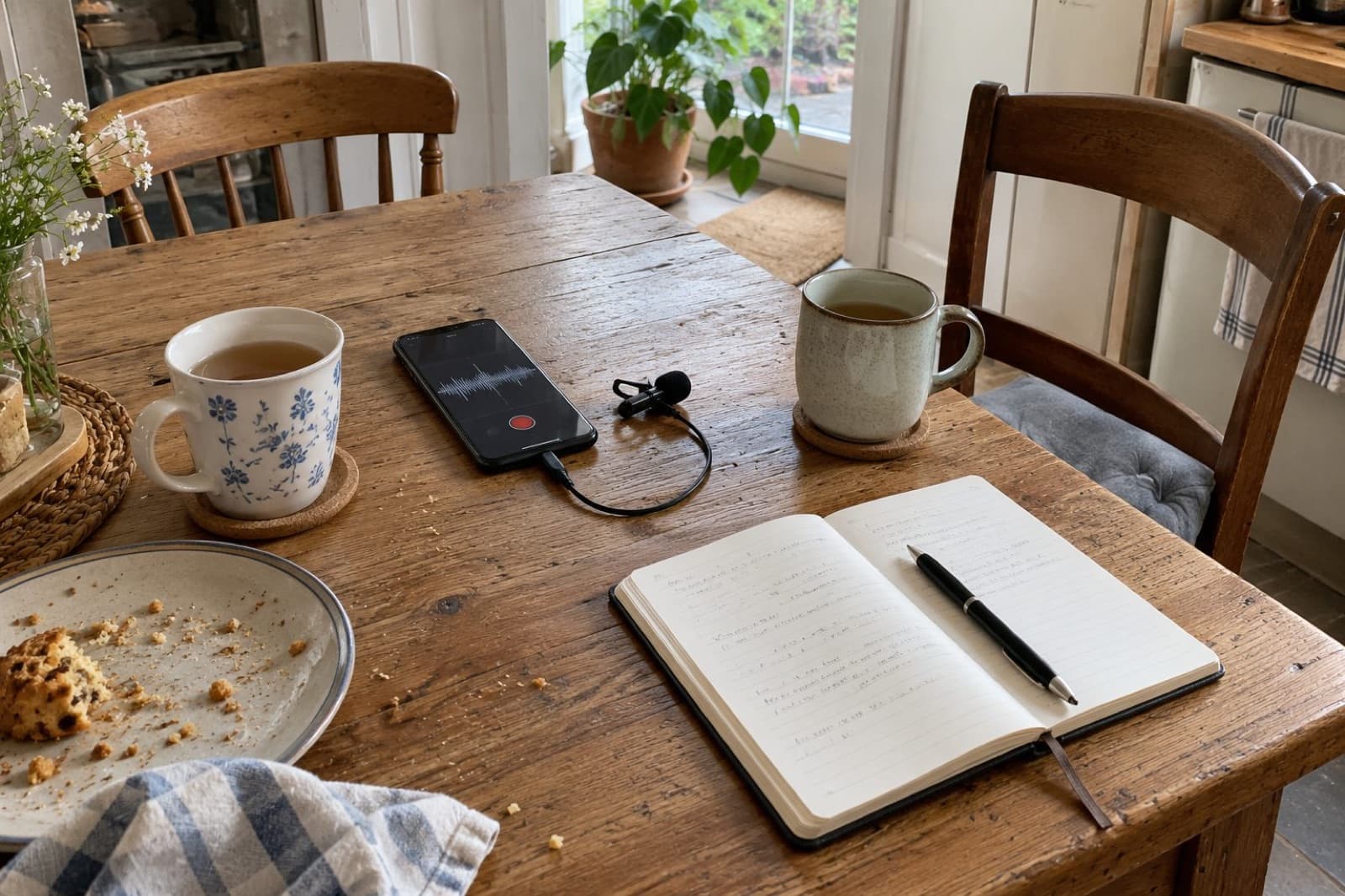
Ask whether they would like to record the conversation, and agree who can hear it. If they prefer to talk without a recorder, the afternoon can still be the gift.
Choose a few questions rather than arriving with a long interview to complete. “What do you remember about arriving?” can take you further than asking for another date. Leave room for the story to go somewhere unexpected.
Afterwards, give them a copy of the recording if they would like one. Ask before sharing it with anyone else.
Good for: a parent who enjoys talking about the past and would welcome a quiet afternoon with you.
2. A photo album, scanned and labelled
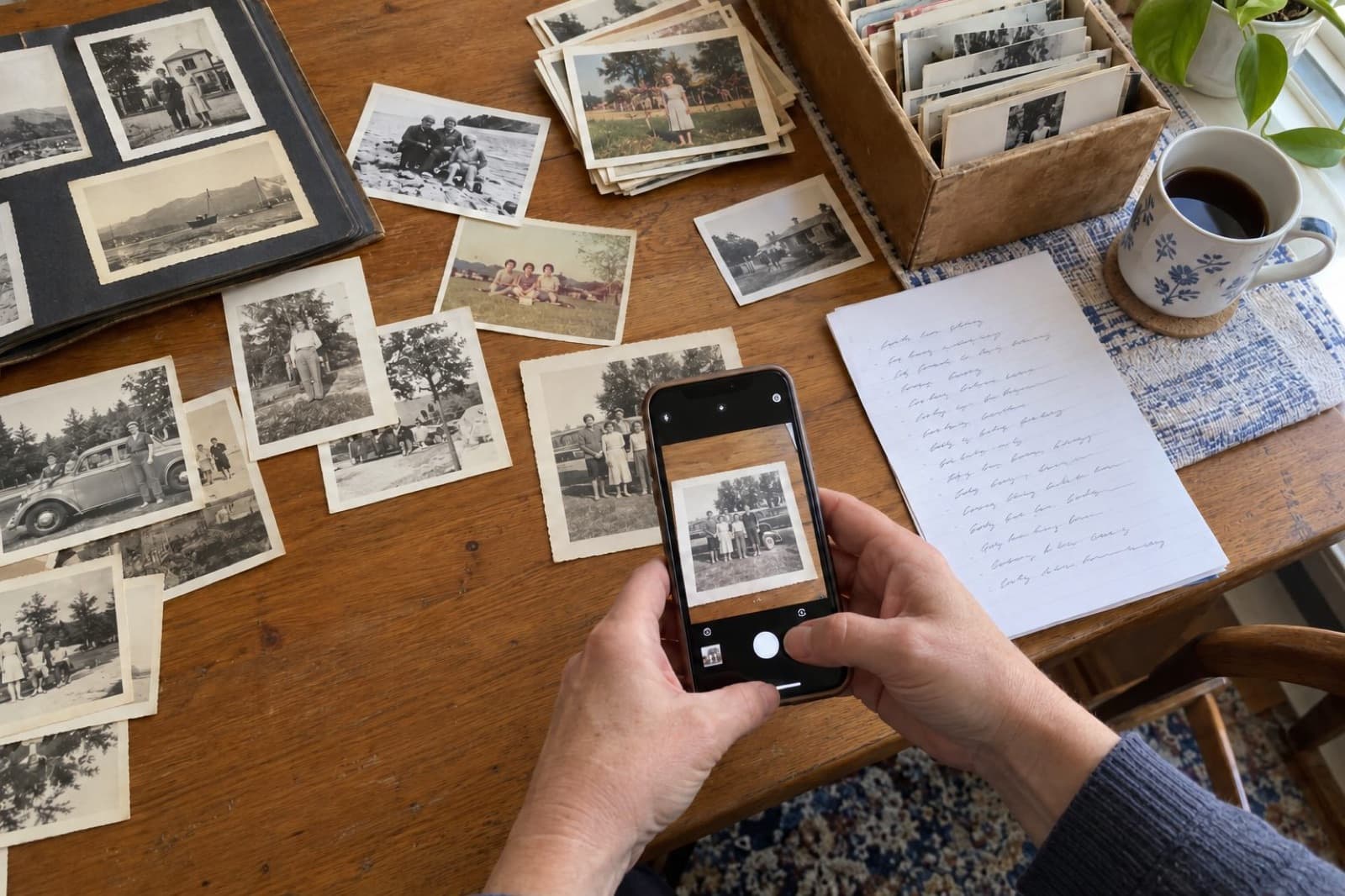
Choose one album or a small box of photographs and offer to make a digital copy.
The gift can include an afternoon looking through it together. Ask who is in each picture, where it was taken and what they remember about the occasion. Keep the answers alongside the files, so the next person to open them understands what they are looking at.
Start with a manageable set. A finished, labelled album is easier to enjoy than a hard drive full of unidentified scans.
Leave fragile or stuck photographs in place and photograph the page, or ask a specialist to help. Agree which copies your parents would like to share with the family.
Good for: someone who enjoys photographs but has been putting off sorting or copying them.
3. A map of a place that matters to them
Find a map of the street where they grew up, the town where they met or a place they often return to in conversation.
It does not have to be from the exact year. Choose a date close enough to show the place they remember, and label it accurately.
The National Library of Scotland's map collection includes historical maps of Scotland, England and Wales, with material for Ireland and elsewhere. For an American place, try the Library of Congress's maps collection.
Check the detail before ordering a large print, and follow the item's reproduction terms. Add a note explaining why you chose that place. You could leave space for your parent to mark the house, school or shop they remember.
Good for: someone with a strong attachment to a particular street, town or landscape.
4. A few pages about the year they were born
Put together a small collection of things from that year or another year that matters to them: a newspaper page, a local photograph, a map or a song list.
Choose a few well-sourced items. Write down where each one came from and what date or place it represents. A national average or an advertisement from another town may be interesting, but it does not tell you exactly what their family paid or experienced.
For American newspapers, the Library of Congress's Chronicling America collection has digitised pages published through 1963. Coverage varies by place and date. For later material, ask a library about local newspaper collections.
Print a few pages or put them in a folder, with a question beside each: “Do you remember this shop?” or “What music were you listening to then?”
Good for: a parent who enjoys history and comparing it with their own memories.
5. A family recipe, written down together
Ask them to make a dish they enjoy cooking, with you there to help and write down the recipe.
Measure the ingredients as you go. Notice the steps they might leave out when explaining it: the thickness of the pastry, how they judge the heat, or what “a little more” looks like.
Ask where the recipe came from. Was it taught by a parent, copied from a book or worked out over several attempts?
Make a recipe card or a few pages for the family, with photographs and the cook's own tips. Let them check it before you share it.
Good for: someone who enjoys cooking and would like another person in the family to learn a favourite dish.
6. A visit to a place from their past
Suggest a day in the town where they grew up, a walk near an old home or a visit to a place they have mentioned.
Plan it with them. Ask where they would like to go, how much walking feels comfortable and where they would enjoy stopping. The day can be as small as one street and lunch.
If travelling would be tiring or impractical, look at maps and photographs together at home. Let your parent explain the route they took to school or where their friends lived.
Take pictures or notes if they would like you to, and give them a small record of the day afterwards.
Good for: someone who enjoys returning to familiar places, or showing those places to the family.
7. Letters from the family
Ask relatives to write a short letter about a particular memory with your parent.
A clear prompt makes this easier: “Tell them about an afternoon you remember together” or “Write about something they taught you that you still use.”
Give everyone enough time, then collect the letters in a box or folder. Younger children can draw a picture, dictate a few sentences or answer a question such as, “What do you like doing with Grandpa?”
Ask contributors before copying their letters for a wider audience. The gift can stay between them and the person it is for.
Good for: a parent whose family is spread across different places, or someone who enjoys handwritten notes.
8. An evening of their favourite music
Ask about the music they listened to when they were young, or the songs associated with a particular time in their life.
Build an evening around their choices. Make a playlist together, cook something they would enjoy and ask where they first heard the songs.
A concert can work too, if the performer, venue and journey suit them. Make the arrangements so they can look forward to the evening without having to organise it.
Good for: someone who enjoys music and would like to share it with you.
9. A day exploring the family history
Choose one question to investigate together. Where did a grandparent live? What was the family shop called? When did someone move to another town?
Bring any names, photographs or papers you already have. Record what you know, what you are unsure of and where you found each new detail.
For American families, the US National Archives' 1950 census website provides access to images of that census and its maps. For another country or period, a local archive or library can help you find an appropriate starting point.
Let your parent tell you what the records bring to mind. A name or address can be the beginning of a conversation as well as a research result.
Good for: someone who is curious about their family history and would enjoy investigating one question with you.
Making the gift feel complete
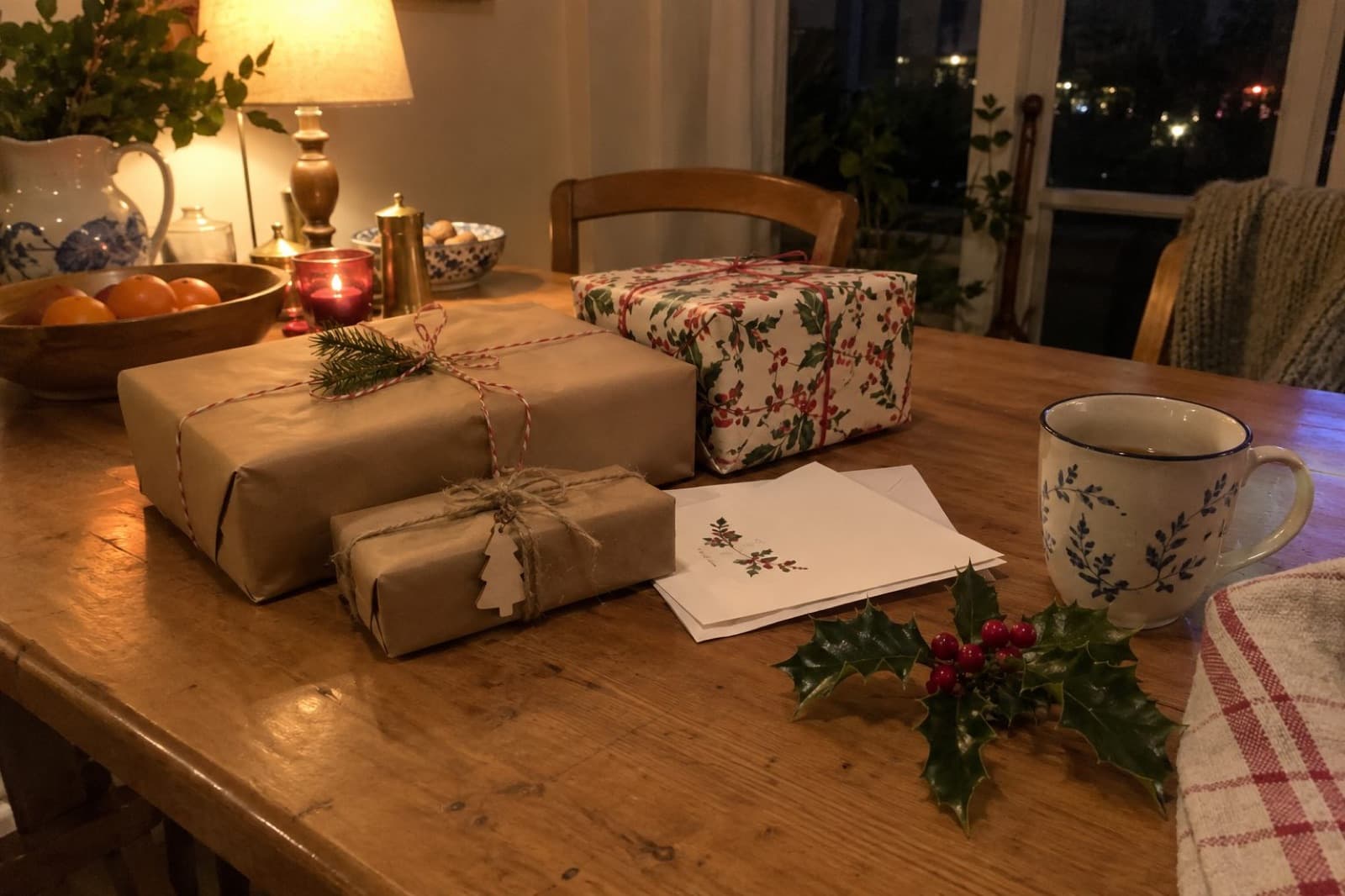
For something that happens after Christmas, give your parents a clear idea of what you are offering.
A card might say: “An afternoon looking through the wedding album together. I'll bring lunch and make copies of the photographs you'd like to share.”
Include something small to open: a photograph, the first recipe card or a map. Suggest a date, while leaving room for them to choose another.
If siblings are giving it together, agree who will organise each part. One person might arrange the afternoon, another make copies, and another bring contributions from the grandchildren.
Choose something you can follow through on. There is plenty to enjoy in one well-planned afternoon.
10. A Remarkable Lives portrait
If you would like someone to guide the conversations and bring the material together, I make portraits of people's lives through Remarkable Lives.
Your parent talks with me on a video call on Zoom, or by phone if that is easier. The family's questions help shape the conversations, and their words, photographs and voice become a private portrait, with the places and times around their story.
They read it before it is shared and decide what they would like included.
As a gift, the full price is paid when you book, and we send you a card to give. The conversations begin whenever is convenient for your parent, so nothing needs to happen before Christmas. Requests by 23 December can be given for Christmas.
If you would like us to do the asking and the writing, you can request a portrait as a gift.

Alastair is an experienced researcher and interviewer, and leads every Remarkable Lives conversation himself. He lives in Gothenburg.